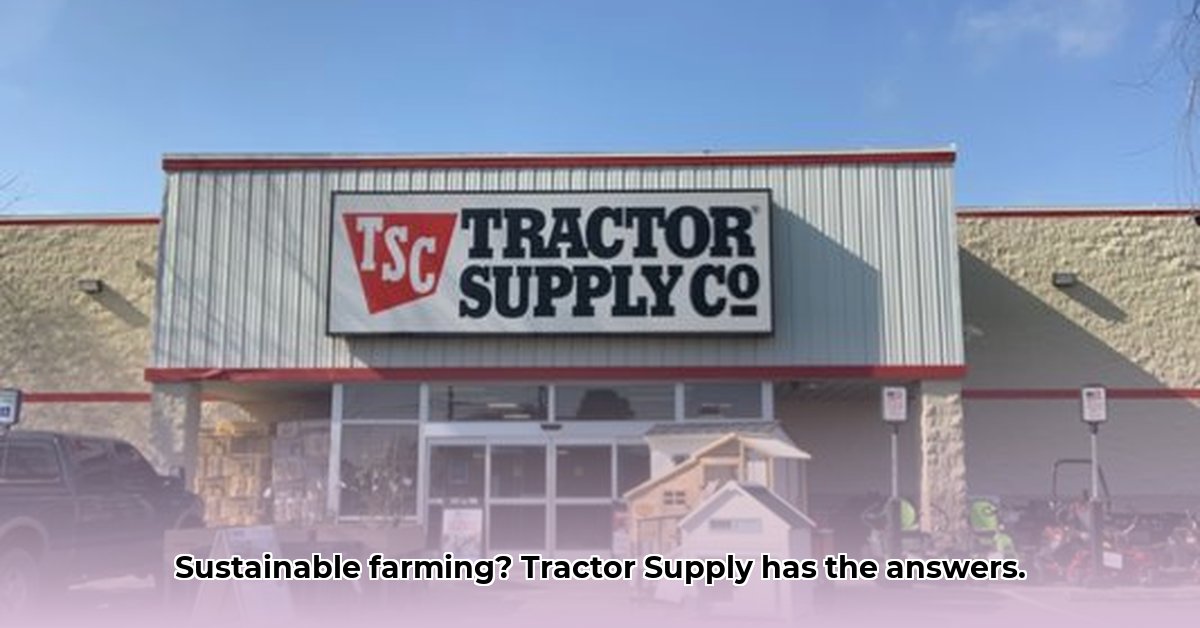
Tractor Supply Company (TSC) in Barnwell, South Carolina, offers more than just farm supplies; it presents a potential pathway to sustainable agriculture in the region. But how significant is its actual impact? This article explores TSC's role, highlighting opportunities and outlining actionable steps for all stakeholders to foster a greener future. For more information on sustainable farming practices, see this helpful resource.
TSC's Potential for Sustainable Farming in Barnwell
TSC's Barnwell location stocks a wide range of products relevant to sustainable farming practices, including organic seeds, eco-friendly fertilizers, and water-efficient irrigation systems. This readily available resource suggests a potential for positive influence on local sustainable agriculture. However, quantifying this impact requires further investigation. How many local farmers are utilizing these resources for sustainable practices? What is the overall environmental impact of TSC’s supply chain? These are crucial questions needing answers.
Unanswered Questions: A Call for Deeper Analysis
While the availability of sustainable farming products at TSC Barnwell is evident, several critical questions remain unanswered. For example, what are the sustainability certifications of their seeds and feed? What is the carbon footprint associated with the transportation of these goods to Barnwell? A comprehensive analysis of TSC’s supply chain transparency and the actual adoption of sustainable practices by local farmers is necessary to fully understand their contribution. This requires more than just observing product availability—we need concrete data to support any claim of impact.
Actionable Steps: A Collaborative Approach
To effectively leverage TSC’s potential, a multi-pronged approach involving multiple stakeholders is vital. These actionable steps, outlined below, can significantly enhance sustainable agriculture in Barnwell.
For Tractor Supply Barnwell:
- Conduct Customer Surveys: Gauge customer interest in sustainable farming products and practices through targeted surveys. This feedback provides valuable direction for inventory management and future product offerings.
- Analyze Sales Data: Track sales of organic seeds, sustainable livestock feed, and other eco-friendly products to identify trends and areas of high demand. This data-driven approach informs strategic purchasing decisions.
- Partner with the Community: Collaborate with local farming organizations, schools, and community groups to offer workshops on sustainable farming techniques. This builds relationships and provides valuable educational resources.
For Local Farmers and Gardeners:
- Embrace Sustainable Practices: Utilize TSC's resources to implement sustainable practices like crop rotation, integrated pest management, and rainwater harvesting.
- Communicate Your Needs: Clearly communicate your needs and preferences to the TSC Barnwell staff. Demand plays a significant role in driving product availability.
For Tractor Supply Corporate:
- Enhance Supply Chain Transparency: Increase transparency regarding the sustainability of their supply chains, detailing the sourcing, production, and transportation impacts of their products.
- Establish Sustainability Goals: Implement clear, measurable, achievable, relevant, and time-bound (SMART) sustainability goals and regularly report on progress.
For Local Government:
- Incentivize Sustainable Farming: Offer financial incentives such as tax breaks or grants to encourage the adoption of sustainable agricultural techniques.
- Invest in Educational Programs: Support educational and outreach programs promoting sustainable agriculture within the Barnwell community.
The Road Ahead: Building a Sustainable Barnwell Ecosystem
Tractor Supply Barnwell possesses significant potential to catalyze sustainable agriculture in the region. However, realizing this potential necessitates a collaborative effort from all stakeholders. The success of any initiative relies on open communication, data-driven decision-making, and concerted action.
Further Research: Addressing Knowledge Gaps
While this analysis highlights the potential of TSC Barnwell, substantial research is needed to fully understand its impact. A comparative analysis of TSC’s sales data with other retailers in the region, focusing specifically on the sales of organic and sustainably sourced products, is crucial. This will provide a benchmark to gauge TSC's contribution to the broader shift towards sustainable practices. Only with comprehensive data can we accurately assess the current state and future potential of sustainable agriculture within the Barnwell community supported by TSC.